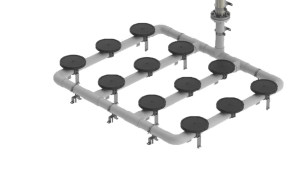

Biological Treatment Equipment
Biological Treatment Equipment
Biological Treatment Equipment . . .
Membrane Bioreactor
A membrane bioreactor (MBR) consists of suspended biomass and microfiltration membranes with nominal pore sizes of 0.1 to 0.4 micrometers for solid separation, and it has extensive applications in the water and wastewater treatment industry. To separate treated effluent from activated biomass, either aerobic or anaerobic suspended growth bioreactors may be used in combination with a biological membrane reactor. Membrane systems can produce effluent quality comparable to the combination of secondary sedimentation tank effluent and microfiltration from a treatment plant. These reactors can be used for municipal, industrial wastewater treatment, and for reuse purposes.
In essence, MBR systems perform both microfiltration and biological treatment within a single process unit. Therefore, they serve either as an auxiliary unit for secondary sedimentation and filtration or can completely eliminate the need for these units. The ability to bypass secondary settling and operate at higher MLSS concentrations provides the following advantages:
Higher volumetric loading, allowing for shorter hydraulic retention times (HRT)
Higher solids retention time (SRT) with reduced sludge production
Operation at low dissolved oxygen (DO) levels and simultaneous nitrification–denitrification in high SRT designs
High-quality effluent in terms of turbidity, bacteria, TSS, and BOD
Reduced footprint for wastewater treatment
MBR systems generally have two configurations:
Membranes submerged inside the bioreactor
Membranes located outside the bioreactor
By replacing secondary settling with membrane separation, issues such as sludge bulking and other problems associated with gravity settling are eliminated. MBR systems can operate at MLSS levels much higher than conventional activated sludge reactors (15,000–25,000 mg/L). Although such high concentrations are achievable, in practice, operating above 8,000–10,000 mg/L is cost-prohibitive.
Applications of MBR Process:
Increasing the capacity of existing wastewater treatment plants
Treating high-strength wastewater, such as from food and pharmaceutical industries
Treating wastewater with high ammonium concentrations, such as leachates
Treating municipal wastewater, especially in areas with limited treatment plant space
Reuse and recycling of treated effluent from wastewater treatment plants
RVT Biomedia
A process for biological wastewater treatment that uses rotating discs or cylinders to promote the growth of microorganisms, which break down the organic matter in the wastewater.
Key Features of RVT Biomedia Systems
Mechanism of Action:
- RN tanks contain media (discs or rods) that partially rotate in the wastewater.
- Rotation allows microbial biofilms to develop on the media surfaces.
- The media alternates between aerobic and anaerobic conditions depending on its position in the tank, enhancing pollutant degradation.
Performance:
- Effective in treating various types of wastewater, especially high-strength industrial wastewater.
- Can significantly reduce biochemical oxygen demand (BOD), total suspended solids (TSS), and nutrients such as nitrogen and phosphorus.
Advantages:
- Space-saving: Requires less area compared to conventional treatment systems.
- Low energy consumption: Passive media movement requires less energy than aeration systems.
- Flexibility: Can operate as a standalone system or in combination with other treatment processes.
AnoxKaldnes Biomedia
A specific type of biomedia, often made of plastic, providing surfaces for biofilm growth. The biofilm consists of microorganisms essential for breaking down organic matter in wastewater.
Process: Typically involves two main stages:
- Anaerobic Stage: Low-oxygen conditions encourage growth of anaerobic and facultative microorganisms. These microbes aid in nitrification, converting nitrates to nitrogen gas, thus removing nitrogen from the wastewater.
- Aerobic Stage: Specific oxygen levels support aerobic bacteria, further breaking down organic matter and enhancing the overall biological treatment process.
Moving Bed Biofilm Reactor (MBBR):
AnoxKaldnes is associated with MBBR technology. The biomedia continuously moves within the treatment tank, maximizing contact between wastewater and the biofilm, improving treatment efficiency.
Advantages:
- Performance: The system design allows for higher biomass retention and better rates of organic and nutrient removal.
- Space-saving: Compact design requires less space than traditional treatment methods, ideal for urban applications.
- Versatility: Applicable to various wastewater streams, including municipal and industrial wastewater.
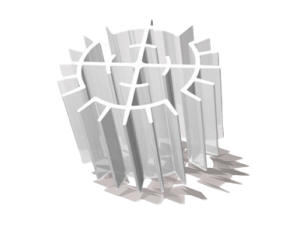
BioMover
The media used in IFAS-MBBR processes in modern wastewater treatment plants are typically made of high-density polyethylene with high buoyancy and are designed with a larger surface area for biofilm growth. This type of mixer is used in the IFAS-MBBR process. The mixer ensures that the wastewater is homogeneously mixed with microorganisms and nutrients, which is essential for effective biological treatment.
Advantages:
High treatment efficiency: Improved mixing enhances pollutant degradation and increases treatment capacity.
Better sludge management: By keeping solids in suspension, the mixer helps prevent settling and maintains controlled treatment performance.
Energy savings: Modern BioMover mixers are designed for efficient energy use, reducing operational costs compared to older systems.
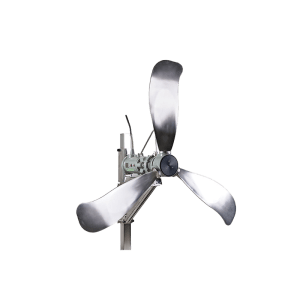
Channel Mixer
Channel mixers are designed to improve the mixing of wastewater with added chemicals and microorganisms, ensuring that treatment processes operate effectively. They help maintain uniformity in composition and concentration within the treatment channel.
Advantages:
Improved reaction times: Enhanced mixing leads to faster reaction times for chemical additives and quicker biological decomposition of pollutants.
Increased treatment efficiency: Uniform mixing can achieve optimal treatment performance and improve removal rates of pollutants such as BOD, COD, nitrogen, and phosphorus.
Flexibility: Channel mixers can be adjusted for different flows and treatment processes, making them suitable for various wastewater treatment facilities.
Specifications:
Pipe diameter: 500 mm and 300 mm
Motor size: 5.5 to 18.5 kW
Capacity: up to approximately 6,800 m³/h
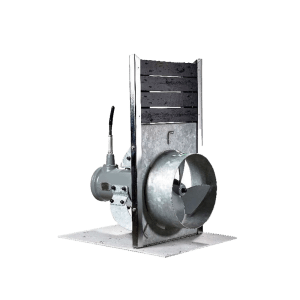
GasMix
The GasMix mixer typically features a unique design that enables effective gas–liquid interaction. It usually combines mechanical mixing elements with aeration systems to ensure uniform gas distribution throughout the liquid.
Advantages:
Improved oxygen transfer: The GasMix design allows rapid oxygen transfer, which is essential for the growth and activity of aerobic microbes that decompose organic matter.
Enhanced treatment performance: By maintaining optimal aeration and mixing conditions, GasMix supports higher removal rates of BOD, COD, and nutrients such as nitrogen and phosphorus.
Energy efficiency: Many GasMix mixers are designed for efficient operation, optimizing energy use while achieving effective mixing and aeration.
Reliable and stable system for mixing anaerobic digester sludge
Low maintenance requirements
Specifically designed for biogas production
Equipped with large-blade impellers suitable for conventional sludge digesters
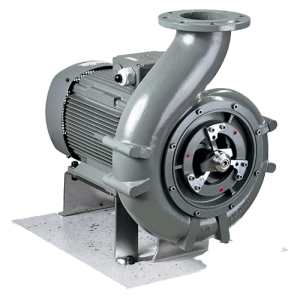
Power Mixer
Power mixers are designed to provide high-energy mixing in wastewater treatment applications. Their main functions include ensuring proper homogenization of wastewater, improving chemical distribution, and facilitating aeration processes in biological treatment systems.
Advantages:
Effective mixing: Power mixers provide intense and uniform mixing, essential for achieving consistent treatment processes and maximizing the efficiency of chemical additives.
Enhanced treatment efficiency: By ensuring uniform distribution of microorganisms, nutrients, and chemicals, power mixers improve biological wastewater treatment and achieve higher removal rates of BOD, COD, and other pollutants.
Flexibility: Power mixers can be adapted for various treatment processes, including activated sludge systems, anaerobic digestion, and chemical precipitation.
Specifications:
Designed for installation on concrete or steel tank walls
Suitable for wastewater treatment plants, biogas production, and other industries
Motor sizes from 5.5 kW to 18.5 kW
Available in two speeds: 300 and 750 rpm
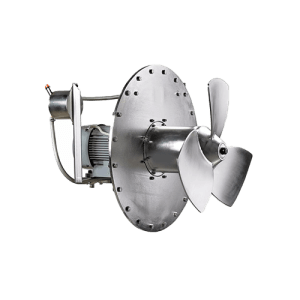
Submersible Mixer
Submersible mixers are designed to operate underwater and effectively mix wastewater, ensuring uniform distribution of solids, nutrients, and chemicals throughout the treatment process. They are particularly useful in processes that require continuous mixing and aeration.
These mixers are available in various power levels and motor speeds, allowing for optimal combination of required initial power, process conditions, and minimal operating time to reduce energy consumption and noise.
Advantages:
Effective mixing: Submersible mixers provide strong and uniform mixing, essential for maintaining optimal conditions in biological treatment and chemical reactions.
Space-saving: Their compact design allows installation in areas with limited space, making them suitable for various treatment configurations.
Low maintenance: Many submersible mixers are designed for easy maintenance and reliable operation, reducing downtime and maintenance costs.
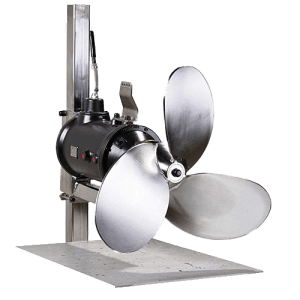
Surface Aeration
Surface Aeration
Surface aeration is an important method in water and wastewater treatment, aimed at increasing oxygen transfer to liquids and facilitating bacterial decomposition of organic matter. It is particularly used in the initial stages of wastewater treatment.
Principles and Operation:
Air introduction: Air is directly introduced to the water or wastewater surface, using pumps, nozzles, or aeration sprays.
Turbulence and mixing: As air enters the liquid, the surface becomes agitated, and oxygen dissolves into the liquid. This mixing enhances gas exchange.
Organic matter decomposition: Dissolved oxygen promotes the activity of aerobic bacteria, which break down organic matter, improving water quality.
Advantages:
Improved water quality: Surface aeration effectively enhances water quality and reduces harmful substances.
Reduced odor and taste: It can help minimize unpleasant odors and tastes in the water.
Simplicity: This method is simple and cost-effective compared to many other techniques.
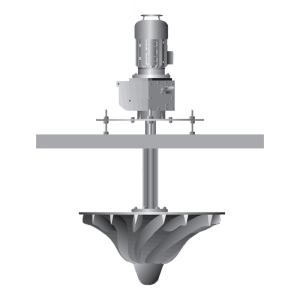
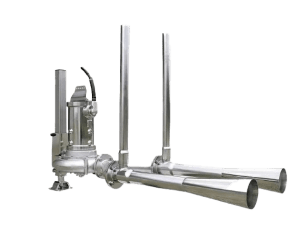
AirJet Aerator
The AirJet aerator is a powerful device for aeration and mixing of water in water treatment units, fish farming ponds, and agricultural or industrial wastewater. It injects significant amounts of air into the water depth using the negative pressure created by the propeller movement. Additionally, the AirJet generates adjustable-angle water flow, promoting mixing and self-cleaning in fish farming ponds.
Key Advantages:
Easy installation and commissioning
Simple operation
Air distribution without the need for an air compressor
Improved oxygen transfer
No clogging for fluids containing solids and debris
Equipped with a stainless steel macerator pump for corrosive fluids
Odor reduction
Aeration Blower
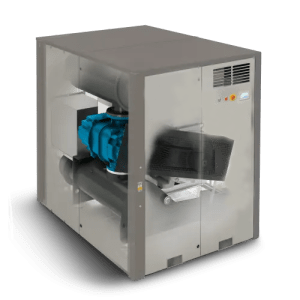
The aeration blower is one of the essential pieces of equipment in water and wastewater treatment, used to reduce pollution and improve water quality. Its operation is based on increasing dissolved oxygen in the water, which is essential for the activity of microorganisms in the treatment process.
Applications of Aeration Blowers:
Aeration: Providing oxygen for microorganisms in the biological section of wastewater treatment.
Mixing: Helping achieve uniform mixing of water and wastewater.
Efficiency improvement: Enhancing the treatment process efficiency and reducing the time required for the removal of organic matter and pollutants.
Types of Blowers:
Positive displacement blowers: Such as rotary blowers that provide a steady airflow.
Centrifugal blowers: Which compress air using centrifugal force and deliver it to the pumping system.
Advantages:
Improved water quality: Increases the quality of treated water and reduces pollution.
Cost reduction: Lowers expenses related to system treatment and maintenance.
Increased productivity: Enhances the efficiency of biological processes.
Aeration Diffuser
The aeration diffuser is a key component in water and wastewater treatment systems, used to increase dissolved oxygen in water. This device helps improve biological processes, particularly the decomposition of organic matter. In general, diffusers can come in various forms, including:
Types of Diffusers
Fine bubble diffusers: These diffusers produce small bubbles, providing a larger surface area for oxygen transfer and increasing aeration efficiency.
Coarse bubble diffusers: These diffusers generate larger bubbles, which can be more suitable for large-scale treatment processes.
Membrane diffusers: These use membrane layers to produce fine bubbles and are very popular due to their high efficiency and low maintenance costs.
Diffuser Operation
Aeration diffusers work by injecting compressed air through the diffuser into the wastewater tank. As air enters, bubbles disperse in the water, adding oxygen and promoting the growth and activity of microorganisms for the decomposition of organic matter.
Applications of Diffusers
Aeration in activated sludge processes for municipal and industrial wastewater treatment
Aerobic treatment of landfill and agricultural leachate
pH adjustment through CO₂ removal
Oxygen supply to fish farming ponds
Oxygenation of rivers and lakes