
Physical processes
Physical Processes
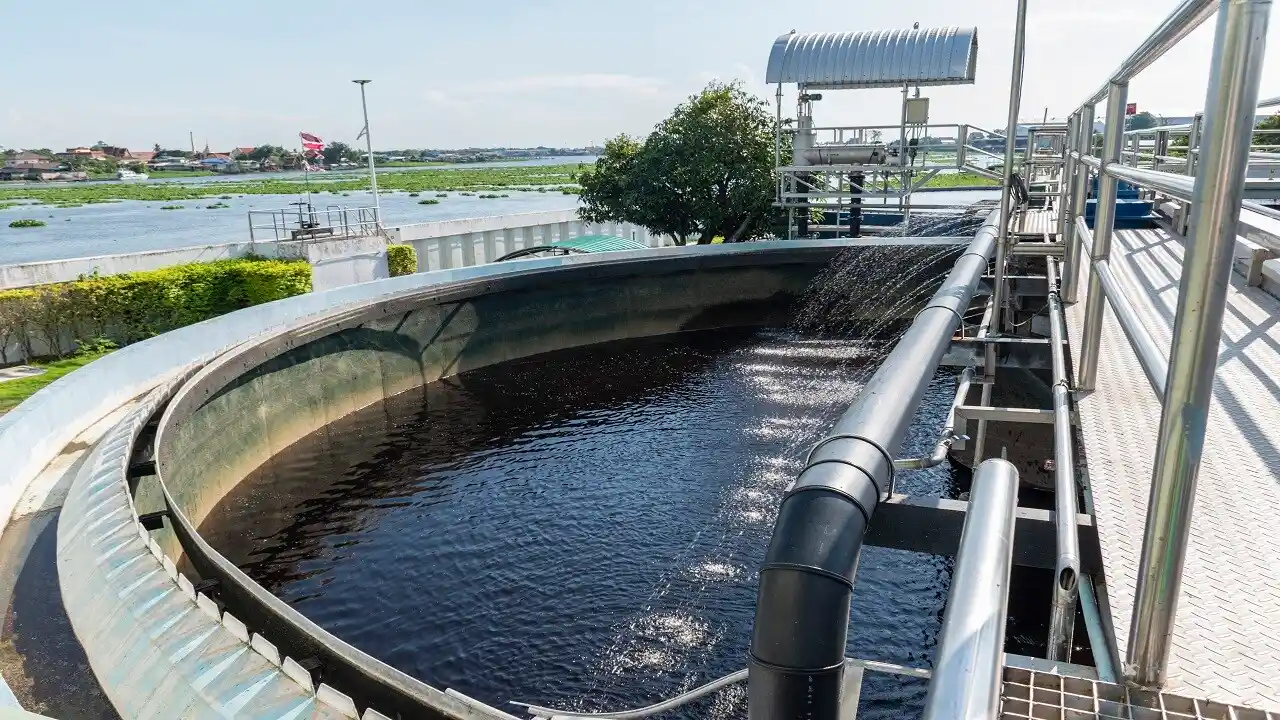
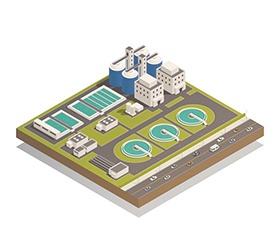
The physical processes covered within the scope of this company’s services include various types of screening systems, grit removal and grease removal systems, flow measurement systems, sedimentation system equipment, clarifiers, and pumping stations.
System…
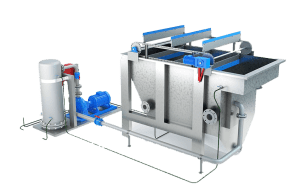
DAF System
The DAF package is in fact an advanced solution designed to increase separation efficiency and clarification of wastewater containing insoluble pollutants such as oil and grease particles and suspended solids. When DAF is combined with a chemical sedimentation process, the two systems together are capable of removing up to 90% of oil and grease, organic and inorganic pollutants, and suspended solids.
Dissolved Air Flotation (DAF) is one of the important wastewater treatment processes in which the removal of various suspended contaminants such as oil, grease, and colloidal particles results in clarified wastewater. In this method, removal is based on the injection of compressed air into the wastewater. During the process, the released fine air bubbles attach to the suspended colloidal particles in the wastewater, causing them to float to the surface of the DAF unit, where they are collected by a skimmer and discharged into a sludge holding tank.
Description
Features of the DAF Grease Trap
Ability to remove more than 99% of emulsified and free oils and suspended solids
Ability to remove more than 75% of chemical pollution (COD) from wastewater
Clarification of effluent due to removal of colloidal particles
Easy transportation and installation due to integrated package design of the DAF unit
Ability to produce relatively solid, low-moisture sludge
Capability to remove detergents from wastewater
Advantages of DAF
Advanced manufacturing technology
Reasonable cost
Minimum required space
Odor removal
Applications of DAF
Refineries and petrochemical industries
Food and dairy industries
Processes whose wastewater contains high amounts of oil
Wood and paper industry wastewater
Textile industries
Leather tanning industries
When grease and oil are present in wastewater in emulsified form, or when their specific gravity is not sufficient to allow easy flotation, dissolved air is used for flotation. Fine air bubbles attach to oil and grease droplets and particles, assisting their flotation. This process requires dissolving air in the wastewater and generating very fine bubbles.
In this method, separation is achieved by introducing fine gas bubbles (usually air) into the liquid phase. Air bubbles attach to solid particles, and the buoyant force of the particle–bubble assembly becomes large enough to cause the particle to rise to the surface. In this way, particles with a density greater than the liquid can be forced to float to the surface. The flotation of particles with a density lower than the liquid (such as oil dissolved in water) can also be facilitated by this process.
The use of gas or air bubbles for separating mineral particles and for treating oil-containing wastewater is widely practiced. In general, the flotation process consists of four main stages:
Generation of bubbles in oily wastewater
Collision between gas bubbles and oil droplets suspended in water
Attachment of oil particles to gas bubbles
Rise of the air–oil assembly to the water surface, where oil (and accompanying suspended solids) is collected
In a DAF system, the wastewater is pressurized to saturate it with air. Pressurization of the wastewater is carried out in three ways:
Pressurizing the entire flow:
In this system, all incoming raw wastewater is pressurized and saturated with air. Compared to the other two methods, this approach dissolves the highest amount of air, resulting in the greatest probability of proper attachment between particles and air bubbles. However, due to the need for larger saturation systems, there is a higher risk of floc breakage caused by pump operation and during pressure reduction.Pressurizing a portion of the flow:
In this system, part of the incoming raw wastewater is diverted to the pressurization system. The main advantages include reduced pumping cost, greater system capacity to handle flocculated flow, and reduced floc breakage. A common drawback of this system and the first method is floc shearing or oil emulsification when the incoming flow undergoes pressure reduction. At equal pressures, the amount of dissolved air in this system is lower than in full-flow pressurization due to the lower wastewater flow rate.Pressurizing the return flow:
In this system, 20–50% of the treated wastewater is returned to the pressurization system. Therefore, floc breakage or re-emulsification of oil in the incoming flow is avoided. If the hydraulic load (based on influent flow rate) is not to be changed, a larger flotation basin must be used due to the addition of the return flow to the total flow.