

Physical Treatment Equipment
Physical treatment equipment
Physical treatment equipment . . .
Disk Filter
Disk filters are used for the separation of biological materials and suspended particles. This type of filter is considered one of the most suitable options for applications in various industries as well as agriculture.
Applications:
Physical treatment of recirculating aquaculture systems
Physical treatment in production enhancement projects in fish farms
Treatment of fish farm wastewater and control of environmental pollution
Treatment of drinking water for separation of phytoplankton and phosphorus
Clarification of industrial wastewater and reduction of BOD
Clarification of wastewater after activated sludge units
Treatment of slaughterhouse effluents and food production units
Physical treatment in fruit juice and concentrate production lines
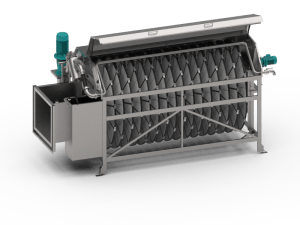
Microstrainer
Microstrainers come in various types, including drum filters and disk filters, and today they are widely used in water treatment to separate different types of phytoplankton, zooplankton, and other suspended particles, as well as in wastewater treatment for clarification and purification of effluent from wastewater treatment plants. They are considered a very suitable alternative to sand filters.
Microstrainers are installed directly in the path of a channel or separation tank, and wastewater enters the shaft through the front inlet. As the wastewater flows through the filters, solids are separated by the filters and conveyed to the end of the microstrainer, where dewatering is performed along the way, and the collected waste is discharged at the end.
Microstrainers are used in the following applications:
Treatment of municipal, rural, and industrial wastewater, reducing BOD and phosphorus.
Physical treatment of drinking water in urban and rural areas to remove phytoplankton, algae, etc.
Polishing of effluent from wastewater treatment plants.
Physical treatment of water and wastewater in fish farms.
Treatment of cooling tower water in thermal power plants.
Treatment of effluent from food production units.
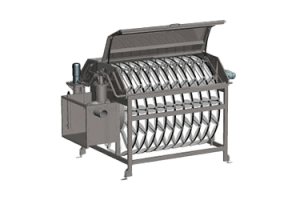
Basket screen
This trash rack consists of the following components:
Trash Rack Frame: Made of hardened steel to hold both sides of the trash basket. Fixed support plates are located at the top of the frame, and installation is carried out using an electric chain hoist.
Basket: Positioned as an angled plate with bars, with bar spacing of 20–50 mm.
Automatic Discharge Plate: Made of hardened steel with bars spaced 20–50 mm apart. It operates automatically via an electric winch and a water level controller.
The perforated basket is connected via a chain to a gear motor, allowing vertical movement. When the discharge plate is lowered, the inlet channel is automatically closed, preventing waste from entering the treatment plant during basket discharge.
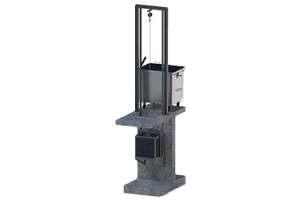
Grab type bar screen
The rake-type trash screen is designed according to the inlet channels to protect all other wastewater treatment plant equipment and prevent the entry of particles. This type of trash screen features vertical bars and a stainless steel frame surrounding the bars. The movement force of the collecting rake is provided by an electric motor.
Bar spacings are preferably 6, 10, 15, 20, 25, 50, and 100 mm. Other spacings are available upon request.
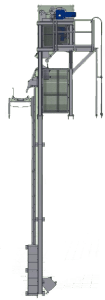
Semi-rota screen
The semi-rotary trash screen consists of a curved mechanical collection plate.
The collection mechanism requires minimal maintenance. This type of trash screen is designed for medium channels with a width of 3 meters and a depth of 2.6 meters.
Bar spacings are preferably 10, 12, 15, 20, 25, and 50 mm, and other spacings can also be designed according to customer requirements.
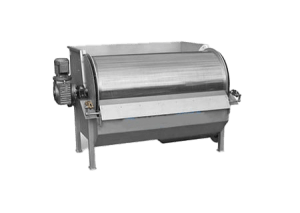
spiral press
It is used for dewatering and separating solids from the incoming flow and can simultaneously perform dewatering and compression of the solids.
It has the ability to convey dry, wet, pasty, sticky, dusty, coarse, and abrasive materials through a screw shaft. Models are available in various types according to requirements.
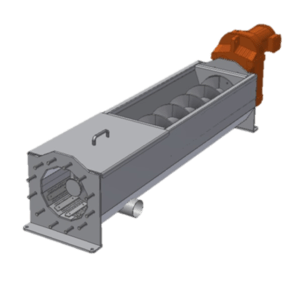
Spiral sieve
It is used in medium and small wastewater treatment plants as well as in industrial companies with a flow capacity of up to 60 liters per second. Depending on the installation method, it comes in different sizes and can be used for channels with widths ranging from 300 to 600 mm.
Wastewater enters the basket directly, and coarse solids are collected. The collected and compressed solids are discharged into a collection chamber, and the water flow returns to the channel.
All components are made of stainless steel, and the screw shaft is made of flexible steel.
Advantages:
Requires minimal space
Improves the treatment process by reducing maintenance costs and energy needs
Automatic cleaning of the screening area
Equipped with a pressurized dewatering system
Capable of outdoor installation
Rotating system for easy access during installation and maintenance
Compatible with channels of varying widths and depths
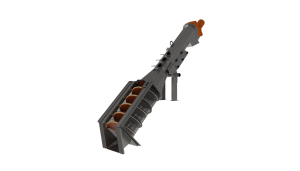
Step Screen
The step screen is a fine bar screen used to separate solids from liquids. This screen can be installed at the inlet of a wastewater treatment plant to prevent the passage of coarse particles.
Since this system can be installed directly on the surface without the need for excavation, it is a suitable method for expanding existing treatment plants. The channel width of this system ranges from 100 to 1600 mm. The appropriate spacing between the bars is 1, 3, or 6 mm. All materials used in this equipment are made of stainless steel and are easy to maintain.
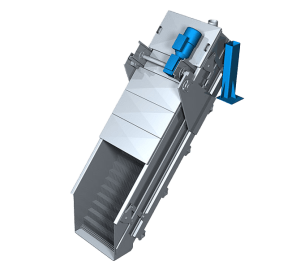
Physical treatment equipment
The removal of heavy mineral particles (grit) during the preliminary stage of wastewater treatment not only extends the lifespan of equipment but also ensures the efficiency of subsequent processes (such as sedimentation and aeration). We offer four principal, industry-proven solutions for optimized grit management:
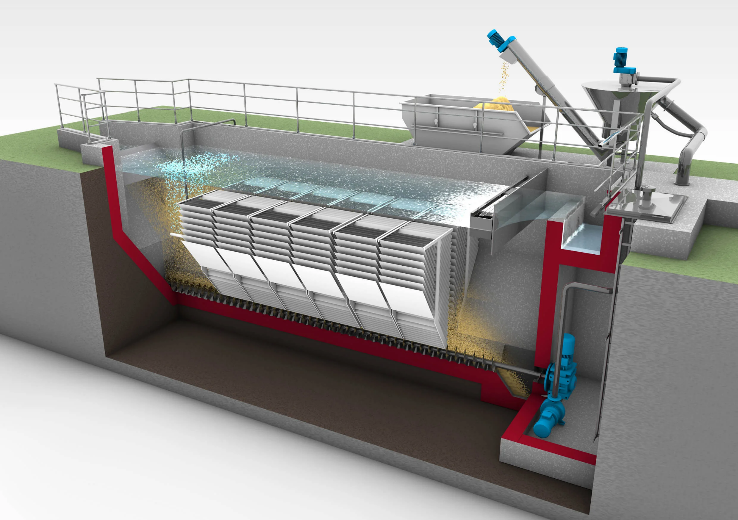
Horizontal Grit Chamber
- Operating Principle: Precise control of the inflow water velocity to allow the settling of coarse particles, without providing an opportunity for lightweight organic matter to settle.
- Advantage: Operational simplicity and minimal need for moving parts, as well as complex maintenance.
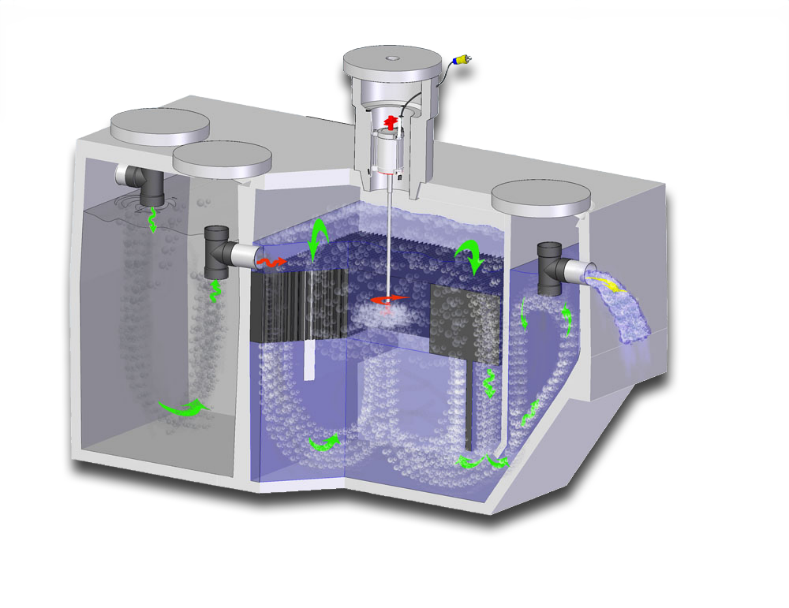
Aerated Grit Chamber
- Operating Principle: Air injection serves two purposes: 1. Minimizing flow velocity to allow grit settling. 2. Creating an upward flow to simultaneously float and remove fats and floating solids (Scum).
- Advantage: Simultaneous removal of fats and grit in a single unit, which reduces the load on subsequent stages and results in cleaner grit.
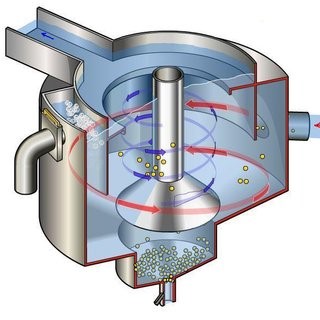
Vortex Grit Chamber
- Operating Principle: By applying centrifugal force through a vortex flow, heavier particles are directed outward and to the bottom for separation.
- Advantage: Exceptionally high efficiency in separating finer grit and a significant reduction in the physical size required for specified flow rates.

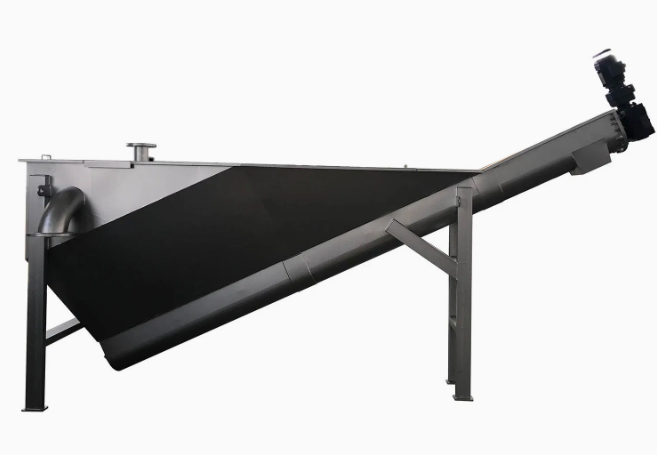
Mechanical Grit Separator
- Operating Principle: Utilizing screw mechanisms for the continuous upward conveyance of collected grit and performing a thorough washing process with clean water during transport.
- Advantage: Production of a high-purity final product (grit), reduction of moisture content, and minimization of organic matter accompanying the grit, which would otherwise directly return to the treatment plant load.
Multi-stage Grit System
- Primary Separation: Use of a horizontal or aerated grit chamber for the removal of coarse particles.
- Fine Separation: Utilizing a Vortex Grit Remover for the efficient separation of finer grit.
- Final Purification: Passing the grit-laden flow through a Screw Classifier for physical washing and removal of organic matter attached to the grit.
- Unmatched Purity and Cost Savings
- Production of very high-purity grit (effective removal of organic matter)
- Significant reduction in the organic content of the resulting sludge
- Extended lifespan and reduced maintenance needs for downstream equipment


